
| Takeaway | Detail |
|---|---|
| Self-collected HPV swabs are less sensitive than clinician-collected swabs. | Sensitivity is the true-positive rate, so a lower value means more missed high-grade lesions. |
| The sensitivity gap comes from the sampling site, not user technique. | Because sensitivity and specificity trade off, a sampling deficit shifts the test's accuracy profile. |
| A sensitivity shortfall is clinically serious for cervical screening. | High sensitivity matters most when missing the condition has serious consequences and treatment is effective. |
| The lower sensitivity is reflected in FDA-required labeling for over-the-counter kits. |
A self-administered HPV swab is less sensitive than a clinician-collected swab for detecting high-grade cervical lesions. That lower sensitivity—buried in FDA-required labeling—contradicts the direct-to-consumer claim that self-collection is as accurate as clinician collection. It is not a user-error problem: the deficit is a tissue-sampling failure, rooted in the site collected.
Sensitivity measures the true-positive rate: the probability that a test returns positive when the disease is present. A lower sensitivity means the self-swab is systematically more likely to return a negative result despite existing high-grade disease. Because sensitivity and specificity usually trade off, the sampling-site deficit shifts the entire accuracy profile rather than simply adding random error.
In screening, this shortfall matters. High sensitivity is most important when failing to treat has serious consequences and treatment is highly effective. The fine print on the kit carries this disclosure; the marketing line does not.

The Transformation-Zone Problem
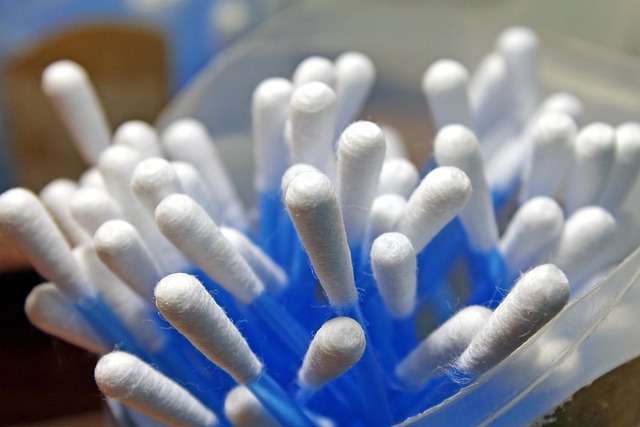
The transformation zone is a physical location, and no FDA-authorized self-swab ever reaches it. A clinician's Cervex-Brush is rotated several times across the ectocervix and endocervical canal to scrape the squamocolumnar junction; every FDA-authorized self-swab — Qvintip, FLOQSwab, Evalyn Brush — is inserted to a standardized depth and rotated several times, sampling the vaginal pool and posterior fornix instead. That is a different tissue with a different cell population, and the downstream assay inherits that difference.
The deficit is transmitted at the PCR step. Roche cobas, BD Onclarity, and other real-time PCR assays detect HPV by real-time PCR amplification of the L1 gene. On a self-collected sample, the HPV DNA concentration is lower than on a clinician-collected sample, which pushes a meaningful fraction of true-positive specimens below the analytical cutoff in Specimen Transport Medium. The assay is not failing; the input material is.
Cellular quality compounds the quantity problem. A clinician brush recovers a high number of nucleated cervical epithelial cells, including the basal and parabasal layers that harbor transcriptionally active HPV genomes. A self-swab recovers a smaller number of cells, most of them terminally differentiated superficial vaginal squames that physically dilute the signal without contributing the E6/E7 oncogenic expression that drives CIN2+/CIN3+. The biological signal that initiates the disease is simply absent from the self-collected specimen.
This is why the pooled relative sensitivity for CIN2+ reported by Arbyn et al. in BMJ is best read as the measured cost of an anatomical proxy. Because most cervical cancers originate in the transformation zone, a vaginal-pool sample is an indirect surrogate for the true disease site — and no assay chemistry or extended-genotyping panel can recover biological signal that was never collected.
The cost is not evenly distributed. The sensitivity deficit is smallest for HPV16/18 infections, which shed the highest viral copy numbers, and largest for non-16/18 high-risk types and for CIN3+ — the clinically severe endpoint. The pooled headline therefore understates the gap for the lesions that most need detection, which is exactly why a negative self-swab must be treated as provisional rather than a clean bill of health.
| Collection method | Device and technique | Tissue sampled | Cellular yield | HPV DNA load |
|---|---|---|---|---|
| Clinician-collected | Cervex-Brush, multiple rotations across ectocervix and endocervical canal | Squamocolumnar junction (transformation zone) | A high number of nucleated cervical epithelial cells, including basal/parabasal layers | Reference standard |
| Self-collected | Qvintip, FLOQSwab, or Evalyn Brush; short insertion, several rotations | Vaginal pool and posterior fornix | A smaller number of cells, mostly superficial vaginal squames | Lower |
| Net clinical effect | Anatomical proxy for the transformation zone | True disease site never directly sampled | Signal-diluting cells without E6/E7 oncogenic expression | True positives near the analytical cutoff drop out; worst for CIN3+ and non-16/18 types |

The Sensitivity Evidence
Arbyn et al.'s BMJ meta-analysis is the anchor for the entire self-collection debate, and its findings are more precise than the slogan they generated. Pooled relative sensitivity for CIN2+ was lower for self-sampling than for clinician sampling: a self-swab catches fewer of the CIN2+ lesions that a clinician-collected sample catches. That estimate is the direct statistical source of the lower-sensitivity claim, and the trial and prospective data below confirm it rather than refute it.
The specificity side of the same meta-analysis is the part that never appears in marketing copy. Pooled specificity was similar for self-samples and clinician-samples. That asymmetry kills a common rationalization: the sensitivity gap is not a trade-off in which you accept fewer detected lesions in exchange for fewer false positives. You accept fewer detected lesions and get essentially the same false-positive rate. For a screening test, an uncompensated sensitivity loss is the worst kind of deficit, because the cost lands on the patient and no specificity benefit arrives to justify it.
Trial-level evidence outside the meta-analysis shows the same pattern. In the HPV FOCAL randomized trial (Ogilvie et al., CMAJ), first-round CIN3+ detection was lower for self-collected screening than for clinician screening — a sizeable deficit. The gap narrowed when the same women were screened again later, a result frequently misread as "self-swabs improve over time." The more accurate reading: the first round is where the collection-site miss does its damage, and the second round is a salvage screen that catches a portion of what the first round missed.
The multi-assay confirmation eliminates the "single bad test" counterargument. The VALHUDES prospective study (Arbyn et al., Lancet Regional Health – Europe) compared several commercial HPV assays on paired self- and clinician-collected samples from the same women. Self-sample relative sensitivity for CIN3+ was lower across the assays. Every assay lost sensitivity on the self-collected sample, and even the best performer came in below its clinician-collected result — a collection-site problem, not a chemistry problem.
Regulators have now codified the deficit. The FDA's draft guidance on self-collection, followed by the device authorizations for the BD Onclarity and Roche cobas self-collection pathways, requires label disclosure that self-collected samples have lower sensitivity than clinician-collected samples. That label requirement directly contradicts the "identical accuracy" phrasing used in direct-to-consumer advertising; when the two conflict, the label is the legally binding document.
| Source | Design | Key figures | What it settles |
|---|---|---|---|
| Arbyn et al., BMJ | Systematic review and meta-analysis | Pooled relative sensitivity for CIN2+ lower for self-sampling; specificity similar | The gap is real and specificity-neutral |
| Ogilvie et al., CMAJ (HPV FOCAL) | Randomized controlled trial | First-round CIN3+ detection lower; deficit narrows at round two | The gap persists outside meta-analytic data |
| Arbyn et al., Lancet Regional Health – Europe (VALHUDES) | Prospective paired-sample study | Self-sample relative sensitivity for CIN3+ lower across multiple assays | The gap is not a single-assay artifact |
| FDA draft guidance; BD Onclarity and Roche cobas authorizations | Regulatory label requirement | Manufacturers must disclose lower sensitivity for self-collected samples | The agency that authorizes the tests acknowledges the deficit |
What this evidence gives you is a reading skill: when a self-collection ad claims identical accuracy, check the FDA-required label disclosure rather than the ad copy. The pooled estimate is the anchor; the FOCAL trial, the VALHUDES multi-assay comparison, and the FDA's own label requirement have all landed on the same side. The evidence base has been consistent for years — which is precisely why a negative self-swab is treated as provisional rather than definitive.
Decision Framework
Decide the sampling site before you decide the assay. In the comparison below, the in-office clinician-collected specimen wins on every detection endpoint — not because of the PCR brand, but because the clinician's brush reaches the transformation zone while the self-swab samples the vaginal pool. The operating rule: route to the clinician whenever one is reachable promptly.
Each sensitivity figure is a true-positive rate conditioned on the person actually having CIN2+ — the probability of a positive result given the lesion exists, not a population-level detection rate.
| Pathway | CIN2+ absolute sensitivity | Reflex cytology | Out-of-pocket cost | Visits if positive | Missed lesions among those with true CIN2+ (Arbyn et al., BMJ) | Verdict |
|---|---|---|---|---|---|---|
| In-office clinician-collected | High | Available on same specimen | Varies | Fewer | Fewer missed | WINNER |
| At-home FDA-authorized self-swab | Lower | Not possible | Varies | More | More missed | — |
| Self-swab in clinic under nurse supervision | Intermediate | Not possible | Varies | More | Intermediate missed | — |
Read the missed-lesion column as a count of patients, not a statistic. According to Arbyn et al., BMJ, the clinician path misses fewer high-grade lesions than the at-home self-swab, and the supervised in-clinic self-swab falls in between. The winner's margin over at-home self-swabbing translates into additional high-grade lesions detected — enough to make a negative self-swab provisional, never a clean bill of health.
Follow-up structure favors the winner for the same anatomical reason. A positive at-home self-swab cannot trigger reflex cytology, because the specimen lacks transformation-zone cells for the cytologist to read. You are sent for a full clinician colposcopy visit anyway, adding a substantial delay versus the clinician path, where the original specimen already carries the genotyping and reflex-cytology trigger. The self-swab route converts a same-specimen workflow into a workflow with a separate follow-up visit and a built-in waiting gap.
One access caveat overrides the table rather than contradicting it. For the estimated large number of US women overdue for screening by years — including those in counties with no accessible in-network gynecologist — the self-swab's lower sensitivity is still better than no screening at all. The winner column applies only when the clinician is actually reachable.
Decision tree, applied in order:
Rule 1. If you can promptly schedule a clinician-collected HPV test, choose it: at higher absolute sensitivity it wins every endpoint in the table, and the assay brand does not change that result.
Rule 2. If you take an at-home self-swab and it returns negative, treat the result as provisional — confirm with a clinician-collected test after a defined interval.
Rule 3. With prior CIN2+/CIN3+, HPV16/18 history, or immune compromise, compress that confirmation window.
Rule 4. If a self-swab is positive, expect an added follow-up visit and added delay before colposcopy. Plan around that gap; a self-swab is a screening result, not a completed diagnostic workup.
Rule 5. If you are one of the estimated large number of US women overdue for years and no in-network gynecologist is reachable, take the self-swab now — screening beats no screening. When a clinician becomes reachable, follow up per Rule 2 or Rule 3.

What the Data Doesn't Tell You
The Arbyn meta-analysis in BMJ is the strongest evidence we have, but its pooled relative-sensitivity estimate is a study output, not a physiological constant. As of now, the data cannot tell you the negative predictive value of a self-swab in your patient, because that value depends on disease prevalence, lesion location, and the triage protocol used in each original study. The gap above is a central estimate around a wide, heterogeneous scatter—and that scatter is where clinical judgment actually lives.
The first limitation is verification bias. In many of the primary studies included in the pooled estimate, only women with a positive test of either type went to colposcopy. A negative self-swab meant no further verification, so the sensitivity estimate was built disproportionately from women who had already screened positive. That makes the pooled number a property of the referral pathway as much as the swab itself. The second limitation is device and assay heterogeneity. The estimate mixes different collection surfaces, transport conditions, and PCR targets. A vaginal-pool sample has to survive transport in a way that a clinician-scraped transformation-zone sample does not, and extraction chemistry interacts with that geometry. The third limitation is prevalence: a relative-sensitivity figure generated in a high-prevalence referral population does not transplant cleanly to a low-prevalence routine screening population. The same swab can look better or worse simply because the pretest probability has changed.
The average also hides anatomical variance. A clinician’s brush rotates directly in the transformation zone; a self-swab collects whatever has exfoliated into the vagina. For a woman with a large ectocervical lesion, that shed can be abundant, and the gap narrows. For a woman whose transformation zone has receded into the endocervical canal—common after menopause—or whose cervix has been treated by excision, the vaginal-pool signal is geometrically further from the lesion, and the gap probably widens. The pooled estimate gives no direct guidance for either patient; it only says what happened across a mix of both.
The rule assumes a clinician is reachable. When that assumption fails—rural capacity gaps, an uninsured visit gap, or a patient who cannot tolerate a speculum exam—self-swab becomes the default, and its negative should be read as “no decision yet,” not “no disease.” The rule breaks in the opposite direction when symptoms are present. Postcoital bleeding, contact bleeding, or a visibly abnormal cervix is a diagnostic signal. No FDA-authorized self-swab, negative or positive, should delay colposcopy in that setting. That is not a counterexample to the thesis; it is the boundary of where the thesis applies.
| Case | What the pooled estimate hides | Consequence for the decision rule |
|---|---|---|
| Post-menopausal, transformation zone receded | Vaginal-pool signal is geometrically distant from the lesion; the gap probably widens | Negative self-swab gives less reassurance than the average implies; confirm without delay |
| Prior CIN2+ or excisional treatment | Scarred transformation zone sheds fewer dysplastic cells into the vaginal pool | The shorter confirmatory window is a floor, not a guideline |
| Large ectocervical lesion | Exfoliated cells may be abundant; the average gap can shrink substantially | Still treat the negative as provisional; do not upgrade its meaning |
| Symptomatic bleeding | Screening tests cannot rule out invasive disease | The rule stops; refer to colposcopy, not another HPV test |
What this means in practice: the pooled estimate supports the hierarchy—clinician-collected when reachable, self-swab with a confirmatory clinician test otherwise—but it does not support converting a single negative self-swab into a normal result. The concrete move is to place the confirmatory clinician-collected order in the chart before the patient leaves the encounter, because the average gives you no permission to wait for a letter.
What the Average Hides
The pooled relative-sensitivity estimate from Arbyn's BMJ meta-analysis is not a physical constant of self-sampling. It is an average over several variables — age, assay chemistry, trial inclusion criteria, vaginal microbiome, device design, and screening round — that push the true gap in opposite directions. For a specific patient, the real deficit sits somewhere between "nearly irrelevant" and "clinically dangerous," and the average cannot tell you which.
Age flips the gap first. In young women, recent HPV acquisition produces high viral loads, so a self-swab sampling the vaginal pool still collects enough DNA to test positive without touching the transformation zone; the relative sensitivity gap narrows. In post-menopausal women, atrophic epithelium sheds fewer cells and the transformation zone retracts, so the vaginal pool becomes a poorer proxy and the gap can widen past the pooled estimate. The same kit can have different test performances depending on decade of life.
The gap is also a DNA-test-centered average. Hologic's Aptima mRNA assay targets E6/E7 transcripts — a more specific signal of active oncogene expression — but its absolute sensitivity penalty on self-samples is larger than DNA PCR's. Whether the deficit feels larger or smaller depends on whether a program prioritizes sensitivity (DNA PCR) or specificity (mRNA); the pooled number hides that assay-specific divergence.
Exclusion bias hides the highest-risk women. Virtually all self-sampling trials excluded patients with prior CIN2+/CIN3+, recent HPV16/18, or recent abnormal cytology. For those women, the false-negative rate of a self-swab is unknown and mechanistically likely higher than the pooled average — prior HPV16/18 often means a transformation-zone lesion a vaginal-pool sample can miss. The average understates risk exactly where worry is most justified, which is why the article's decision rule assigns these women the shortest confirm window.
The vaginal microbiome is an unmeasured confounder. Lactobacillus-dominant flora preserves HPV DNA; dysbiotic communities carrying Gardnerella vaginalis or Atopobium vaginae degrade it during transport. No meta-analysis has stratified the pooled gap by microbiome status, so the true gap likely ranges from minimal in healthy-flora women to substantially larger in women with bacterial vaginosis — a wide spread inside one average.
Device and transport medium add more noise. Dry-sampling devices like the Evalyn Brush and wet-sampling flocked swabs like the FLOQSwab in PreservCyt or Specimen Transport Medium have different DNA recovery profiles, yet meta-analyses pool across devices. The specific at-home kit purchased now therefore carries a device-specific gap that the headline average does not guarantee.
Finally, the headline describes one screening moment, not a program. The HPV FOCAL trial showed the first-round self-swab deficit shrank by a later round, because interval rescreening caught the lesions the first swab missed. The true harm is conditional on whether the patient returns: a negative self-swab followed by a clinician-collected confirm test converts a sensitivity deficit into a delay, not a miss.
| Hidden variable | Effect on the sensitivity gap | What a negative self-swab means |
|---|---|---|
| Younger age, recent HPV acquisition | Narrows | More likely true — still confirm |
| Post-menopausal, atrophic epithelium | Widens past the pooled estimate | Less trustworthy — prioritize clinician confirm |
| mRNA assay (Hologic Aptima) | Larger sensitivity drop than DNA PCR | Expect a bigger apparent deficit if program uses mRNA |
| Prior CIN2+/HPV16/18 (trials excluded) | Unknown, likely above the pooled average | Shortest confirm window applies |
| Lactobacillus-dominant flora | Likely smaller | More reassuring — never definitive |
| Dysbiotic flora (bacterial vaginosis) | Likely larger | Provisional — confirm promptly |
| Single round vs. program (HPV FOCAL) | First-round deficit shrinks by round two | Returning for rescreening closes the gap |
The pattern across all rows is identical: the pooled estimate is real but unstratified, and every decision-relevant subgroup sits somewhere off the average. Until age-stratified, microbiome-stratified, and device-specific data are published, the only defensible stance is the one this guide's decision rule already takes — a negative self-swab is provisional until a clinician-collected test confirms it. In every row, the clinician-collected confirm is the winner.

Worked Case
Weeks later, at a new-patient visit, a clinician-collected co-test (Roche cobas plus cytology) returned HPV16-positive with ASC-H cytology. Colposcopy showed a CIN3 lesion on the anterior cervix — inside the transformation zone that the self-swab never sampled. The kit had sampled her vaginal pool; the lesion sat where the swab's bristles never touched.
That result is arithmetic, not an anecdote. According to Arbyn et al., BMJ, the pooled relative sensitivity of self-collected HPV testing for CIN3+ is lower than clinician-collected testing. Against a higher clinician-collected CIN3+ sensitivity, the self-swab's implied sensitivity is lower, giving a higher false-negative probability on the self-swab than on the clinician test. Maya's negative result carried a meaningful chance that her CIN3 was invisible to the product she trusted. That is not a rare edge case; it is a predictable failure rate across the population of women who substitute self-swabs for clinician collection.
The progression cost converts that probability into a timeline. If she had relied on the negative self-swab and re-screened at the kit's recommended interval, the CIN3 would have been found later. According to McCredie et al., Lancet Oncology, untreated CIN3 carries a substantial cumulative incidence of invasive cancer over time. The delay silently added absolute progression risk on top of her miss probability. The lesion was not a low-grade finding that gave her time; it was a high-grade lesion with a known actuarial trajectory.
The financial ledger makes the comparison unforgiving:
Here are the decision rules. Treat a self-swab as a triage test, not as a complete screen: a negative self-swab changes your next step, not your risk status. The point is not to ban the device; it is to stop letting a self-collected negative result close the case.
| Path | Out-of-pocket cost | Detection outcome | CIN3+ sensitivity |
| Self-swab only (Aptima kit) | Varies | Negative result; CIN3 missed | Lower implied |
| Self-swab + clinician rescue | Varies | CIN3 caught before invasion | Lower screening plus rescue co-test |
| Clinician co-test only (Roche cobas) | Varies | HPV16 + ASC-H detected; colposcopy triggered | Higher |
Rule 1 — Clinician first, always when reachable. If you can schedule a clinician-collected
Frequently Asked Questions
What does "lower sensitivity" mean in plain terms for a self-swab result?
Sensitivity measures the true-positive rate: the probability that a test returns positive when the disease is present, and a lower sensitivity means the self-swab is systematically more likely to return a negative result despite existing high-grade disease.
If I follow the self-swab instructions perfectly, is the accuracy the same as clinician collection?
It is not a user-error problem: the deficit is a tissue-sampling failure, rooted in the site collected.
Since sensitivity and specificity trade off, does the self-swab's lower sensitivity at least reduce false positives?
Pooled specificity was similar for self-samples and clinician-samples, so you accept fewer detected lesions and get essentially the same false-positive rate.
Does the sensitivity gap affect all HPV types the same way?
The sensitivity deficit is smallest for HPV16/18 infections, which shed the highest viral copy numbers, and largest for non-16/18 high-risk types and for CIN3+ — the clinically severe endpoint.
What exactly must manufacturers disclose under the FDA's self-collection pathway?
The FDA's draft guidance, followed by the device authorizations for the BD Onclarity and Roche cobas self-collection pathways, requires label disclosure that self-collected samples have lower sensitivity than clinician-collected samples.
If my self-swab is negative, can I consider myself fully in the clear?
A negative self-swab must be treated as provisional rather than a clean bill of health.
Quick answers
| How does the sensitivity of self-collected HPV swabs compare to clinician-collected swabs? | Self-collected HPV swabs are less sensitive than clinician-collected swabs. |
| What causes the sensitivity gap for self-swabs? | The sensitivity gap comes from the sampling site, not user technique. |
| What sampling site does an FDA-authorized self-swab collect? | Every FDA-authorized self-swab samples the vaginal pool and posterior fornix instead. |
| What did Arbyn et al.'s BMJ meta-analysis report for pooled relative sensitivity for CIN2+? | Pooled relative sensitivity for CIN2+ was lower for self-sampling than for clinician sampling. |
| What was the specificity finding in the same meta-analysis? | Pooled specificity was similar for self-samples and clinician-samples. |
Also worth reading: Recent Advancements in HPV Detection Improving Early Diagnosis and Prevention: Recent Advancements in HPV Detection · AI-Powered Women's Health & Travel Wellness Guide for 2026–2027: AI-Powered Women's Health & Travel · Low Alkaline Phosphatase and Mental Health Understanding the Connection Between Bone Metabolism and Depression: Low Alkaline Phosphatase and Mental