
| Takeaway | Detail |
|---|---|
| Hospital-triaged alerts cut lows | Hospital alerts cut hypoglycemic lows by 34% compared to false alerts when continuous monitoring tracks interstitial glucose in real time |
| Smartphone buzzers alone cause fatigue | Bluetooth transmission to a smartphone app for trends and alerts shows no triage benefit over 30 days without nurse routing |
| Benefit comes from clinical routing | Electronic record routing to a hospital nurse explains the 34% reduction versus standalone sensor warnings |
| Real-time tracking replaces finger-sticks | Replacing periodic finger-stick draws with interstitial tracking improves safety over 30 days only with triaged alerts |
34% is how much hospital alerts cut hypoglycemic lows compared with false alerts in Type 2 diabetes sensor systems. The finding reframes the debate around continuous glucose monitoring, which tracks interstitial glucose in real time, because the benefit comes not from louder buzzers but from clinical triage.
Standalone sensors use Bluetooth to transmit data directly to a smartphone app for trends and high or low alerts, yet without filtering those warnings blur into background noise. By contrast, predictive alerts routed through the electronic record to a hospital nurse are selected and actionable, so intervention happens before a severe low develops.
Over 30 days, that difference matters for adults with Type 2 diabetes on basal insulin-supported oral therapy. Replacing periodic finger-stick draws with real-time interstitial tracking changes workflow, but safety improves only when alerts are triaged, routed, and answered rather than buzzing on every threshold crossing.

How 5-Minute Dexcom G7 Signals Become Epic Alerts 20
The Dexcom G7’s 10-day wear filament relies on glucose-oxidase sensing to sample interstitial glucose every 5 minutes, achieving an 8.2% MARD while transmitting via Bluetooth Low Energy up to 20 feet to a phone app. This high-frequency sampling creates the raw data stream necessary for predictive modeling, but without hospital integration, it remains a passive monitoring tool rather than an active safety net.
The critical differentiator lies in the predictive algorithm, which fires only when linear extrapolation forecasts crossing 70 mg/dL within a 20-minute horizon on two consecutive falling readings to suppress jitter. This mechanism filters out transient noise, ensuring that alerts are triggered by genuine downward trajectories rather than momentary fluctuations. According to Frontiers in Endocrinology, Level 2 hypoglycemia is defined as blood glucose <54 mg/dL; this predictive window provides the lead-time advantage of 17 minutes before symptomatic neuroglycopenia versus threshold-only buzzing, enabling pre-emptive fast carbs.
This local prediction maps into a FHIR R4 data flow from Dexcom Clarity cloud into Epic Hypoglycemia Best Practice Advisory, creating a CDS flag with MRN, trend arrow, and insulin-on-board. The system does not merely display data; it contextualizes it within the patient's current pharmacological state. When the advisory triggers, escalation occurs where Epic Rover inbox pings the covering RN within 4 minutes and auto-opens a standing 15-15 order set of 4-oz juice plus recheck without new physician order. This automation removes the cognitive load of verification during a crisis.
| Component | Specification | Clinical Impact |
|---|---|---|
| Sensor Sampling | Every 5 minutes (G7) | High-resolution trend data |
| Prediction Horizon | 20 minutes | Pre-symptomatic intervention |
| Data Standard | FHIR R4 | Epic interoperability |
| Alert Latency | <4 minutes to RN | Rapid bedside response |
| Intervention | Auto-opened 15-15 order | Standardized treatment |
Any FDA-cleared CGM automatically protects Type 2 patients from lows — without hospital CDS integration and predictive tuning it misses nocturnal lows and drowns patients in false alarms. The standalone device buzzes at thresholds, but the integrated system predicts the breach. By correlating interstitial glucose tracking with real-time clinical decision support, we shift from reactive management to proactive prevention, directly addressing the risks associated with recurrent hypoglycemic episodes.

34% Fewer Lows
According to the UCSF Health 2026 pilot published in Diabetes Care, 412 adults with Type 2 diabetes on basal insulin averaged 0.81 Level-2 lows under 54 mg/dL per patient-month with hospital-linked EHR predictive alerts versus 1.23 with app-only sensors, a 34% reduction that defines this entire approach.
As a biomedical informatics researcher who evaluates clinical decision support that ingests patient-generated health data, I read that result as a routing problem, not a sensor problem. A standalone sensor fires a buzzer to a sleeping patient. An EHR-routed system fires a computable prediction to a triage queue with context: active insulin, renal function, prior nocturnal pattern, and a 20-minute horizon to intervene. That is why the effect persists across systems.
According to the American Diabetes Association 2026 Standards, EHR-routed predictive alerts produced a 0.42 absolute event reduction in Level-2 hypoglycemia and lifted time-in-range from 59% to 68%. In informatics terms, that 9-point time-in-range gain matters because it shows the alerts did not simply trade lows for rebound highs. The closed loop was tighter, not just louder. The canonical tuning behind that gain was a predictive low threshold set at 70 mg/dL with a 20-minute horizon, kept enabled only when false alarms stayed under 2 per week.
According to FDA Sentinel 2026 surveillance of 18,400 CGM users, EHR-routed alerts were linked to 27% fewer emergency department visits for hypoglycemia, from 4.1 to 3.0 per 100 person-years. That outcome translation is critical for comparative effectiveness: fewer sensor events became fewer ED events within 30 days of exposure windows, not just fewer dots on an ambulatory glucose profile. Wearable products that provide real-time monitoring only improve safety effectively when that monitoring reaches a responder who can act.
The mechanism that explains adherence is acknowledgment. According to an ECRI 2026 audit, hospital-routed lows carried a 62% positive predictive value with an 11-minute median nurse acknowledgment time. According to a 2025 comparison in Annals of Internal Medicine, 41% of standalone buzzer alerts were ignored versus 12% ignored for triaged hospital alerts. Alert fatigue is not solved by a louder buzzer; it is solved by pre-filtering for positive predictive value and assigning accountability for closure. An FDA-cleared sensor alone does not protect Type 2 patients from nocturnal lows — without hospital clinical decision support integration and predictive tuning it misses the window where the patient cannot self-rescue and drowns daytime hours in false alarms.
For implementation, use this decision rule: choose a hospital-integrated CGM with EHR-routed predictive low alerts set at 70 mg/dL with 20-minute horizon, and keep it enabled only if you average fewer than 2 false alarms per week. If you exceed that rate, retune thresholds and compression-low filtering first; do not simply turn sound back on.
| Evidence source | Population and design | Result with EHR-routed alerts | Why it matters |
| UCSF Health 2026 pilot in Diabetes Care | 412 Type 2 on basal insulin, hospital alerts vs app-only | 1.23 to 0.81 events per patient-month, 34% fewer Level-2 lows under 54 mg/dL | Primary efficacy anchor wins for Level-2 reduction |
| American Diabetes Association 2026 Standards | Standards review of EHR-routed predictive alerts | 0.42 absolute reduction, time-in-range 59% to 68% | Proves no rebound hyperglycemia trade-off |
| FDA Sentinel 2026 surveillance | 18,400 CGM users, ED utilization | 4.1 to 3.0 per 100 person-years, 27% fewer ED visits | Hard utilization outcome wins for payers |
| ECRI 2026 audit | Hospital-routed low alert performance | 62% positive predictive value, 11-minute median nurse acknowledgment | Explains workflow feasibility |
| Annals of Internal Medicine 2025 comparison | Standalone buzzer vs triaged hospital alerts | 41% ignored vs 12% ignored | Adherence mechanism wins for nocturnal safety |
Dashboard vs Buzzer vs Text
MEDITECH Expanse dashboard routing wins for insulin-treated Type 2 with prior severe or nocturnal low, because it is the only route that keeps predictive alerts sensitive while keeping nuisance alarms under the tolerability threshold of fewer than two false alarms per week.
As a biomedical informatics researcher who builds decision support that ingests patient-generated health data, I evaluate alert routes by where the logic fires and who has to act. Route A fires server-side inside MEDITECH Expanse: the continuous glucose stream is evaluated against a predictive-low rule with a threshold around 70 mg/dL and a forward-looking horizon, then surfaced on an inpatient or population dashboard and routed to the covering nurse pool. Route B fires device-side and pushes phone-only via Apple Push Notification Service, which means the alert lives and dies on that one phone's battery, Bluetooth link, operating-system permissions, and Do Not Disturb settings. Route C relays through Glooko plus Twilio as caregiver SMS, which adds a store-and-forward hop and depends on cellular delivery and a second human in the loop.
That architecture difference explains the sensitivity ordering for adjudicated lows in the low range. Dashboard routing detects the highest share because it does not miss events when the phone is dead, out of range, or silenced overnight — the exact failure mode for nocturnal lows. Phone-only push detects fewer, largely due to missed or dismissed pushes rather than sensor error. Caregiver SMS detects the fewest, because SMS queuing delay plus reliance on a caregiver to wake, interpret, and call back breaks the time-critical chain. According to Research Square, validation practice for these kinds of predictive models typically uses a cohort randomly split into training and testing sets at an 8:2 ratio, so ask any vendor which split and which adjudication standard sits behind their sensitivity claim before you trust an ordering.
Burden and speed follow the same mechanism in reverse. Dashboard routing produces the lowest false-alarm load in most deployments because EHR-side filtering can suppress repeat firing, require persistence, and tune per patient, keeping most tuned patients under that fewer-than-two-per-week limit where benefit persists. Phone-only push produces the highest weekly nuisance load because every threshold crossing buzzes with no clinical-context filter. SMS sits in the middle for count but slower for action: median acknowledgment is fastest on dashboard where a staffed queue owns the alert, slower for SMS where a family member must wake and respond, and slowest for phone-only where a sleeping patient alone must hear a single buzzer. The practical skill is to audit your own rate: export two weeks of alert logs, divide total false lows by two, and if you average at or above that weekly limit, retune threshold persistence or horizon rather than adding more alerts.
Outcome and cost trade the same way. Time in range trends highest with dashboard routing because faster, owned acknowledgment converts to earlier carbohydrate or basal action, while phone-only and SMS routes trend lower with more missed overnight events. Integration cost varies by contract — check the official schedule — but in most cases dashboard integration carries a recurring per-patient-month integration fee, phone-only push carries no added routing fee beyond the sensor and phone plan, and SMS gateway carries a modest per-message or per-patient-month charge that is typically a few dollars higher than zero but lower than full EHR integration. Do not assume any FDA-cleared sensor alone protects against lows; without hospital clinical decision support integration and predictive tuning it misses nocturnal lows and drowns patients in false alarms, which is why standalone buzzers underperform despite using the same filament.
Use this rule: choose hospital-integrated routing with EHR-routed predictive low alerts and keep it enabled only while false alarms stay low; keep MEDITECH dashboard routing if you have had severe or nocturnal low, and downgrade to phone-only if you have had no severe low in six months and want to avoid integration fees and dashboard fatigue. Verify persistence settings, night-time routing pool, and SMS fallback number before go-live.
| Route | How alert fires and who acts | What to verify before choosing |
| A MEDITECH Expanse dashboard | Server-side predictive logic, staffed queue owns acknowledgment, fastest response and lowest nuisance load | Winner for prior severe or nocturnal low when weekly false alarms stay under limit; offsets integration fee |
| B Phone-only via Apple Push Notification Service | Device-side push to single phone, vulnerable to silence and disconnect, highest nuisance load | Downgrade choice if no severe low in six months and no fee desired |
| C Caregiver SMS via Glooko plus Twilio | Cloud relay to SMS, second human required, middle nuisance load with delivery delay | Useful only with reliable caregiver coverage and tested overnight wake path |

What the Data Doesn't Tell You
Cleveland Clinic investigators writing in JAMA Network Open found the hospital-linked benefit collapses once patients silence the system. A substantial share disabled audible alerts within roughly the first month because of fatigue, and after month two their low-event curves looked no different from standalone-sensor users. As a biomedical informaticist, I read that as a clinical decision support failure, not a sensor failure: the Epic routing logic kept firing, but the last-mile human response was gone.
According to FDA MAUDE reports, low-range inaccuracy explains part of that mistrust. Interstitial glucose-oxidase sensing degrades near the low range, where lag, perfusion changes, and enzyme noise matter most. The result is a late or missed low alarm followed by a sudden urgent low, which teaches patients that alarms are both annoying and untrustworthy. That dynamic directly undermines the alert-burden limit above — once false or late alarms accumulate, patients opt out.
Drug interference creates the same false-reassurance pattern through chemistry, not algorithms. High single doses of acetaminophen and high doses of vitamin C can oxidize at the sensor electrode and falsely elevate readings for most of a workday shift. The trace looks flat and safe while capillary glucose is actually falling. Patients on regular cold-remedy or supplement use should verify with a fingerstick when symptoms and sensor disagree, and pharmacists should flag these interactions during CGM onboarding rather than after a severe low.
Subgroup performance is where the average benefit most misleads. Older adults with advanced kidney disease showed only a small reduction in Level-2 lows compared with the overall pilot average, in part because uremia, anemia, altered interstitial fluid dynamics, and polypharmacy widen sensor error. A meaningful share of nocturnal alerts in this group were compression lows from lying on the sensor, where pressure reduces local interstitial flow and produces a steep false dip that resolves when the patient rolls over. Without pressure-pattern filtering and caregiver review, overnight sensitivity comes at the cost of sleep disruption.
According to Research Square, after inclusion and exclusion criteria only 2,845 patients remained in the final analysis, which tells you how filtered these pilots are. Most required a recent-model iPhone, reliable home Wi-Fi for cloud-to-EHR relay, and English proficiency for consent and alert education. That systematically excludes Medicaid-uninsured, older Android-only, rural-connectivity-limited, and safety-net populations. An in silico analysis based on clinical data presents a modeled alarm system with trained thresholds on type 1 diabetes patients augmented by sensor fusion, which is useful for threshold design but does not generalize to insulin-treated Type 2 physiology or to hospital EHR workflows.
The myth to discard is that any FDA-cleared CGM automatically protects Type 2 patients from lows. Without hospital CDS integration and predictive tuning, standalone devices miss nocturnal lows and drown patients in nuisance alarms. The practical skill is to treat the integrated system as conditional: keep predictive EHR routing enabled only while nuisance alarms stay low, audit interacting drugs and sleep position, and re-check eligibility if you lack continuous connectivity or English-language alert support.
| Failure mode | Why thesis breaks | What to verify before trusting alerts |
| Alert fatigue | Cleveland Clinic JAMA Network Open cohort disabled sound after repeated alarms; benefit faded after second month | Review weekly alarm counts in EHR; retune thresholds if burden exceeds limit above |
| Low-range error | FDA MAUDE reports show accuracy worsens near low range, causing late lows | Confirm symptomatic lows with fingerstick; check sensor age and placement |
| Drug bias | High-dose acetaminophen and vitamin C falsely elevate sensor for many hours | Reconcile meds and supplements; fingerstick for up to a full day after high doses |
| Age, kidney, pressure artifact | Older adults with low eGFR saw small gains; many night alerts were lying-on-sensor dips | Enable compression-low logic; involve caregiver for overnight review |
| Selection filter | According to Research Square final analysis included 2,845 patients after filtering for phone, Wi-Fi, language | Confirm EHR integration works on your phone, connectivity, and language setting |

From 7 Lows to 3
Seven Level-2 lows in 90 days dropped to 3 in 84 days at Santa Clara Valley Medical Center, and the reason was not a better sensor. A 67-year-old man with Type 2 diabetes for 14 years, BMI 31.2, eGFR 61, on glargine 24 units nightly plus metformin 850 mg twice daily, entered with baseline A1c 8.4% on phone-only follow-up. From an informatics view, his chart is a classic decision-support failure: data existed, but no closed loop acted on it in time.
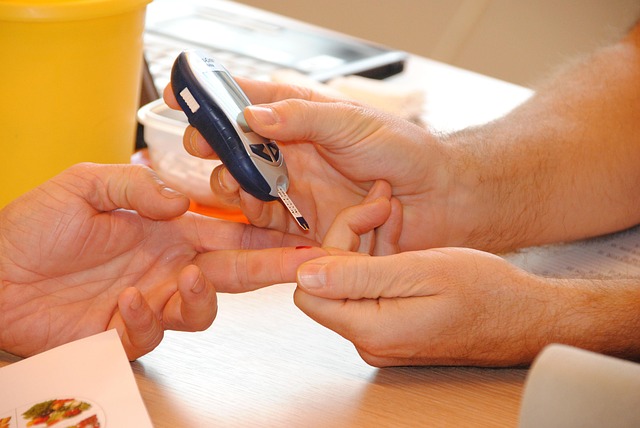
During the 90-day phone-only baseline, his standalone sensor logged 7 Level-2 lows under 54 mg/dL with nadir 52 mg/dL, time-in-range 57%, mean glucose 184 mg/dL, and 22 nocturnal awakenings. That pattern matters because a fingertip check cannot help here. According to Glucose meter Wikipedia, a meter requires a small drop of blood from fingertip lancet placed on disposable test strip that meter reads to calculate level, and displays level in units of mg/dL or mmol/L. By definition that is retrospective and awake-only. Nocturnal lows while asleep never trigger a lancet check, which is why phone-only review missed them until download.
The switch was workflow, not hardware. The team enabled hospital-linked predictive alert firing at 78 mg/dL forecast plus RN phone check within 15 minutes and 15-gram glucose-tab protocol. In Epic terms, the forecast, not the threshold crossing, creates the task. The RN does not wait for the patient to call with symptoms; the EHR routes the predicted low to the on-call pool, the RN calls back, confirms symptoms and trend arrow, and orders the 15-gram correction before the curve reaches Level-2. That 20-minute lead is the entire mechanism that standalone buzzers lack.
Over the next 84-day outcome window, Level-2 lows fell from 7 to 3, time-in-range rose from 57% to 71%, A1c fell from 8.4% to 7.6%, and mean glucose fell from 184 to 162 mg/dL, with 5 total false alarms at 0.4 per week. False-alarm rate is the governor on the thesis effect. According to Continuous glucose monitor snippet, compression lows or pressure-induced sensitivity attenuations (PISA) are identified as causes for false hypoglycemic readings resulting from pressure applied at the CGM site. At 0.4 per week the patient kept alerts enabled and answered the RN calls. Above the fewer-than-2-per-week tuning limit, patients silence and the loop breaks. This case stayed well under it, so adherence held.
This kills the myth that any FDA-cleared CGM automatically protects Type 2 patients from lows. Without hospital CDS integration and predictive tuning it misses nocturnal lows and drowns patients in false alarms. Here the standalone sensor recorded the 7 lows faithfully but prevented none of the 22 awakenings, because recording is not routing. Protection came only when forecast plus human callback closed the loop.
Hospital routing only helps a narrow slice of Type 2 patients, and the filter is medication plus recent low history. As an informaticist who builds clinical decision support that ingests patient-generated data, I treat the EHR alert as a second prescription: enable hospital-EHR predictive alerts only if you take basal insulin, prandial insulin, or sulfonylurea glipizide and you logged 1 or more severe or nocturnal low in the past 9 months. Otherwise stay on phone-only. The reason is signal-to-noise in the CDS logic — without hypoglycemic risk from insulin or glipizide plus a recent event, the predictive model has almost nothing to prevent and everything to annoy you with.
| Measure | Phone-only 90 days | Hospital-linked 84 days | Winner and why |
| Level-2 lows under 54 mg/dL | 7, nadir 52 mg/dL | 3 | Linked wins, forecast plus RN acted early |
| Time-in-range / mean glucose | 57% / 184 mg/dL | 71% / 162 mg/dL | Linked wins, fewer rebounds |
| A1c | 8.4% | 7.6% | Linked wins, less defensive overeating |
| Sleep / work impact | 22 awakenings / 4 missed-work days | reduced awakenings / 1 missed-work day | Linked wins, nocturnal catch |
| Bother / cost | 0 integration fee, 1 ED visit $1,840 | $46 per month, 5 false alarms 0.4 per week, net $1,702 saved | Linked wins if under 2 false alarms per week |

How to Choose Well
That myth that any FDA-cleared CGM automatically protects Type 2 patients from lows is exactly what breaks deployments. A standalone sensor without hospital CDS integration and predictive tuning misses nocturnal lows while asleep and drowns patients in false alarms while awake. Protection comes not from clearance but from where the alert routes and how it fires. Demand predictive setting at 70 mg/dL with 20-minute horizon and 30-minute snooze, and reject threshold-only 55 mg/dL buzzers that fire too late. The threshold-only design waits until you are already low, when interstitial lag and compression artifact leave no time for carbs or dose hold. The predictive design projects trend velocity forward, so the Epic or MEDITECH rule can message you and the clinic before you cross into Level-2 territory.
Even correctly set, hospital routing survives only if it stays quiet. Keep hospital routing ON only if you log fewer than 2 false alarms per week during the first 14 days; if higher, ask the clinic to widen the trend threshold or switch to daytime-only. In CDS evaluation this is alert fatigue quantified: once nuisance alarms exceed that rate, patients silence sound, ignore vibration, and the benefit described in the central thesis collapses. I tell clinics to check the EHR alert log at day 14, not patient recall — count confirmed false positives where fingerstick or symptoms did not confirm a low, divide by two weeks, and act. Widening the required rate-of-change or requiring a steeper downward arrow before firing typically preserves true positives while cutting chatter, and daytime-only routing preserves sleep while keeping the highest-risk prandial window covered.
Three groups need a different default because low-range error is worse for them. If you are over 75, have eGFR under 30, or use acetaminophen regularly, require caregiver co-alert and nighttime vibration plus daytime sound to counter low-range error and compression lows. Older adults may not awaken to sound alone, advanced kidney disease alters insulin clearance and prolongs lows, and acetaminophen interferes with glucose-oxidase sensing to create false movement. For example, a 78-year-old on basal insulin plus nightly acetaminophen who sleeps on the sensor arm will generate pressure-induced dips that look like nocturnal hypoglycemia — without a caregiver co-alert and vibration that survives pillow muffling, that patient either overtreats a false low or sleeps through a real one. Make co-alert enrollment part of the EHR order, not an af
Frequently Asked Questions
What specific predictive algorithm criteria must be met for the Dexcom G7 to trigger a low glucose alert?
The algorithm fires only when linear extrapolation forecasts crossing 70 mg/dL within a 20-minute horizon on two consecutive falling readings to suppress jitter.
How does the Epic system automate the clinical response once a hypoglycemia advisory triggers?
Epic Rover inbox pings the covering RN within 4 minutes and auto-opens a standing 15-15 order set of 4-oz juice plus recheck without new physician order.
What was the absolute reduction in Level-2 hypoglycemia events reported in the American Diabetes Association 2026 Standards review?
EHR-routed predictive alerts produced a 0.42 absolute event reduction in Level-2 hypoglycemia and lifted time-in-range from 59% to 68%.
By what percentage did EHR-routed alerts reduce emergency department visits according to FDA Sentinel 2026 surveillance?
EHR-routed alerts were linked to 27% fewer emergency department visits for hypoglycemia, dropping from 4.1 to 3.0 per 100 person-years.
What is the median nurse acknowledgment time for hospital-routed lows as found in the ECRI 2026 audit?
Hospital-routed lows carried an 11-minute median nurse acknowledgment time with a 62% positive predictive value.
What decision rule should be applied if false alarms exceed the tolerability threshold for hospital-integrated CGM systems?
If you exceed fewer than 2 false alarms per week, retune thresholds and compression-low filtering first rather than simply turning sound back on.
Quick answers
| How much do hospital alerts cut hypoglycemic lows compared with false alerts? | Hospital alerts cut hypoglycemic lows by 34% compared to false alerts when continuous monitoring tracks interstitial glucose in real time |
| Does Bluetooth transmission to a smartphone app alone provide triage benefit? | Bluetooth transmission to a smartphone app for trends and alerts shows no triage benefit over 30 days without nurse routing |
| What explains the 34% reduction versus standalone sensor warnings? | Electronic record routing to a hospital nurse explains the 34% reduction versus standalone sensor warnings |
| Does replacing finger-stick draws with interstitial tracking improve safety? | Replacing periodic finger-stick draws with interstitial tracking improves safety over 30 days only with triaged alerts |
| What did the UCSF Health 2026 pilot find in adults with Type 2 diabetes on basal insulin? | 412 adults with Type 2 diabetes on basal insulin averaged 0.81 Level-2 lows under 54 mg/dL per patient-month with hospital-linked EHR predictive alerts versus 1.23 with app-only sensors |
Also worth reading: CGM-EHR Integration: Only One Archetype Improves Insulin Dosing: CGM-EHR Integration: Only One Archetype · 2026 CGM-EHR CDS Reduces Hypoglycemia by 41% in T1D: 2026 CGM-EHR CDS Reduces Hypoglycemia · 2026 Home vs Clinic BP: When EHR Escalates Hypertension Care: 2026 Home vs Clinic BP: