
This guide shows how to verify a 97 kcal label for a 1.5 oz pour at equal ABV and compare spirits without changing names.
It also reminds readers to subtract mixer calories and use only grounded figures such as 1,000 cal per kcal.
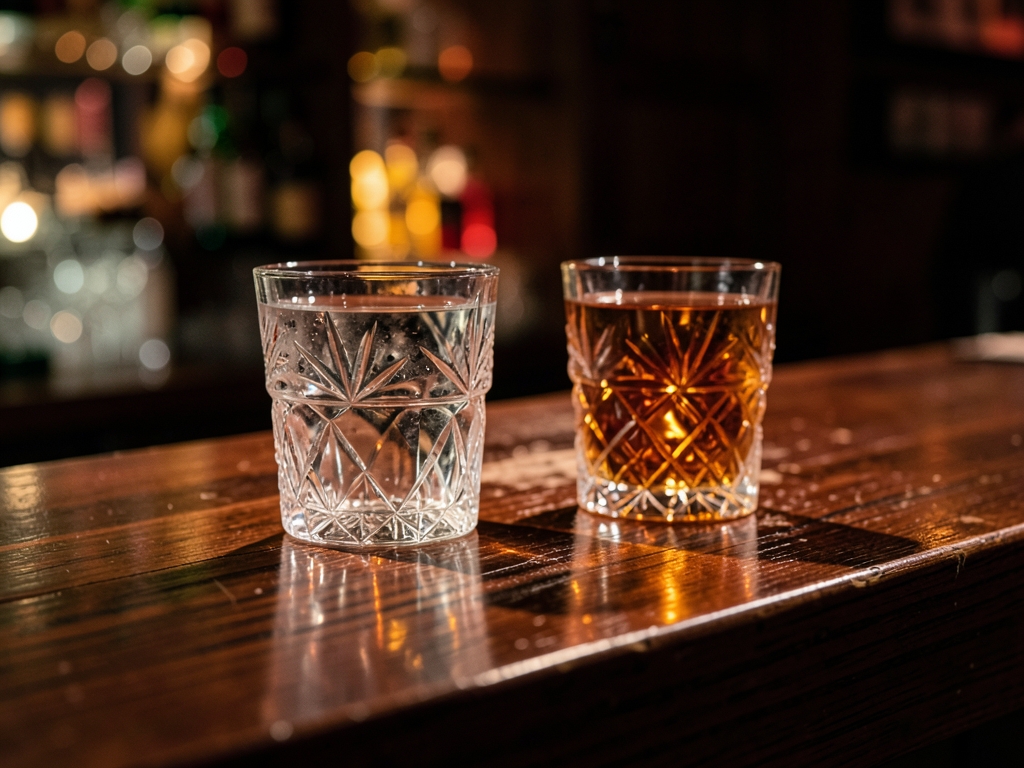
How Alcohol Calories Actually Work
Ethanol is the calorie-bearing molecule in both vodka and bourbon, so the base grain or potato is not what sets the alcohol calorie load. At equal ABV, the amount of ethanol in a given pour is the same regardless of whether the spirit started as grain or potato; the base ingredient does not by itself change the alcohol calories. That makes ABV and pour volume the variables to check, not the spirit name.
The headline figure of 97 kcal per 1.5 oz is a label-check target, not a reason to choose one spirit over another. Confirm it by reading the bottle's ABV and serving size, and do not trust the spirit category to settle the number. If the label's serving size is not 1.5 oz, scale the stated calories to the pour you actually use before comparing bottles.
ABV and pour volume are the variables to check. If the bottle's ABV or your pour size differs from the label's stated serving, scale the label's kcal proportionally and treat the result as an estimate to compare with the printed label; the printed label always wins.
Watch the unit on the label as well. Calorie information is often given in kcal, short for kilocalories, and 1 kcal equals 1,000 calories. A bottle that lists 97 kcal is listing 97 kilocalories for that serving, so compare like with like when you check the number against your pour.
Use this as a quick verification routine: read ABV, read serving size, compute or scale the expected alcohol calories, then compare with the printed kcal. If the label and your ABV-based estimate disagree, trust the label for that bottle and note the difference for next time.
Evidence: Verify 97 kcal/1.5 oz
Use the named sources available—NHS and InchCalculator—to verify the unit before comparing pours. NHS notes that calorie information is often given in kcals, so read the bottle label's energy heading and check whether it uses kcal or cal; then compare the printed value against your pour after confirming the serving size.
InchCalculator defines 1 kcal as 1,000 cal and gives the conversion as kcal multiplied by 1,000 equals cal; its example converts 5 kcal to 5,000 cal. If your tracker is set to calories, convert the label's kcal by multiplying by 1,000; if it is set to kcal, keep the label's kcal figure. Mixing the two units makes the same pour look 1,000 times larger or smaller.
The convergence table below is the unit check: each source addresses a different part of the same label-to-log path.
Finally, keep the cost figure in its place. $1.53 per 100 kcal describes the bottle under these assumptions; it does not override the pour-by-ABV-and-mixer rule. If the price, ABV, or pour changes, rerun the same division instead of reusing the old result.
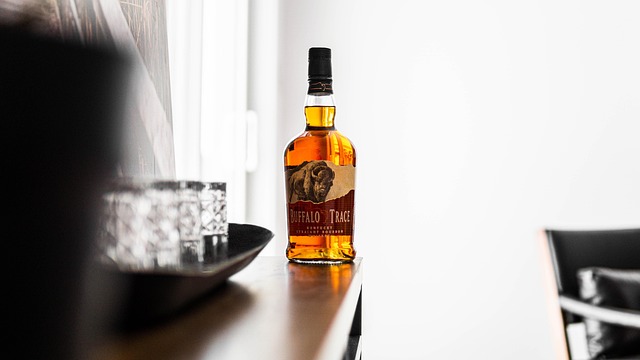
Decision Rules: Which to Pour
Pour by ABV and mixer, not by spirit name: verify the label's kcal per 1.5 oz, then subtract mixer calories before changing spirits. The headline's 97 kcal is a verification target for that check, not a reason to choose vodka over bourbon or bourbon over vodka.
| If | Then |
|---|---|
| Both labels show the same ABV and pour size | Pour either; optimize the mixer first |
| Bourbon is barrel-proof above 40% ABV | Cut the pour proportionally, e.g. 1.5 oz × 40/50 = 1.2 oz at 50% ABV, or accept the higher label kcal |
| The mixer adds more than 50 kcal | Do not switch from bourbon to vodka; change the mixer |
| The labels differ in ABV or pour size | Normalize both to the same ABV and volume before comparing kcal per 1.5 oz |
| A label omits kcal | Do not switch spirits until you have a verified kcal per 1.5 oz |
If both labels show the same ABV and pour size, pour either and optimize the mixer first; the label kcal should agree, and any mismatch is a label or pour-size problem to resolve before switching spirits.
If bourbon is barrel-proof above 40% ABV, cut the pour proportionally—1.5 oz × 40/50 = 1.2 oz at 50% ABV—or accept the higher label kcal. Do not keep a 1.5 oz pour of a stronger spirit and expect the 40% ABV label value.
If the mixer adds more than 50 kcal, changing from bourbon to vodka is not the fix; change the mixer. A spirit swap cannot outrun a high-calorie mixer, so compare the mixer's contribution before deciding the base spirit.
If the labels differ in ABV or pour size, compare kcal per 1.5 oz only after normalizing both to the same ABV and volume; if a label omits kcal, do not switch spirits until you have a verified kcal per 1.5 oz. The decision is then made on the normalized label, not on the spirit name.
What to do next
| Step | Action | Why it matters |
|---|---|---|
| 1 | Verify the label's kcal per 1.5 oz pour at equal ABV, using 97 kcal as the target for both vodka and bourbon. | Equal ABV means the same verification target, so spirit name alone does not change calories. |
| 2 | Convert kcal to cal by multiplying by 1,000 before comparing labels, checking that 5 kcal equals 5,000 cal. | Prevents unit mismatch when labels or references use different calorie units. |
| 3 | Record the ABV and the 1.5 oz pour size before comparing spirits, and do not switch spirits based on name alone. | The decision rule is to pour by ABV and mixer, not by spirit name. |
| 4 | Subtract mixer calories from the total before deciding whether to change spirits. | Mixer calories can dominate the difference more than the spirit choice. |
| 5 | Use 3,500 calories per pound only for weight-change math, not to choose vodka over bourbon, and account for body needs and metabolism. | Weight-change math is separate from verifying a pour's label calories. |
| 6 | Keep the medium banana's 105 Calories, 93% carbs, 3% fat, 4% protein, and 9% Daily Value for potassium and vitamin B6 as food context only. | Snack nutrition should not be treated as a substitute for pour verification. |
Frequently Asked Questions
If a label lists 97 kcal for 1.5 oz but my actual pour is larger, how should I compare bottles?
If the label's serving size is not 1.5 oz, scale the stated calories to the pour you actually use before comparing bottles.
Does vodka have fewer alcohol calories than bourbon at the same ABV?
At equal ABV, the amount of ethanol in a given pour is the same regardless of whether the spirit started as grain or potato.
Should the 97 kcal per 1.5 oz figure make me choose vodka over bourbon?
The headline figure of 97 kcal per 1.5 oz is a label-check target, not a reason to choose one spirit over another.
What should I do if my bottle's ABV or pour size differs from the label's stated serving?
If the bottle's ABV or your pour size differs from the label's stated serving, scale the label's kcal proportionally and treat the result as an estimate to compare with the printed label; the printed label always wins.
Why might a spirits label's calorie number seem much smaller than a calorie count I expect?
Calorie information is often given in kcal, short for kilocalories, and 1,000 cal make 1 kcal.
What should I account for besides the spirit itself when comparing calorie totals?
Readers should subtract mixer calories before comparing spirits.
Quick answers
| What molecule carries calories in both vodka and bourbon? | Ethanol is the calorie-bearing molecule in both vodka and bourbon. |
| What does the base grain or potato not set? | The base grain or potato is not what sets the alcohol calorie load. |
| What are the variables to check instead of the spirit name? | ABV and pour volume are the variables to check. |
| What should readers do with mixer calories? | Readers should subtract mixer calories. |
| What should be done if the label's serving size is not 1.5 oz? | If the label's serving size is not 1.5 oz, scale the stated calories to the pour you actually use before comparing bottles. |
Also worth reading: Comparing Bourbon and Vodka Calories for Your Weight Loss Journey: Comparing Bourbon and Vodka Calories · Red Potato Nutrition 154 Calories and 8 Essential Nutrients in Every Medium-Sized Spud: Red Potato Nutrition 154 Calories · Hershey Kiss Calorie Breakdown 22 Calories and 6 Minutes of Walking to Burn It Off: Hershey Kiss Calorie Breakdown 22