
For 2026 hypertension titration, this guide uses the days 2–7 average of a 7-day home BP log—2 readings/day, at least 12 valid readings—as the default input rather than a single clinic reading.
That answer changes when the log is incomplete, invalid, or discordant beyond the stated rule, in which case a clinic reading is used.

How a 7-day log beats one clinic reading
For this section, the 7-day home log means one specific protocol: two readings per day, morning and evening, for seven days; discard day 1 as acclimation; average the valid readings from days 2 through 7. If every session is complete, that schedule creates 14 scheduled readings, with 12 remaining after day 1 is removed. That definition matters because “home BP” can mean anything from a single spot check to a full titration dataset, and only the full log gives a reproducible input for the days 2–7 average.
The reason to prefer repeated readings is straightforward: high blood pressure usually has no symptoms, so regular checks are needed to identify it, as the Recharge Health & Wellness hypertension overview notes. A clinic reading captures one moment in one setting. A 7-day log samples the same person across repeated resting states, including different mornings and evenings, which makes the average less dependent on a single unusual session. The NHS high blood pressure overview also emphasizes that blood pressure medicines and lifestyle changes can help people stay healthy, which is exactly why the input used to adjust therapy should be stable enough to trust.
Technique has to be checked before day 1, because a log can faithfully record a bad method. Use a validated upper-arm cuff, confirm the cuff size is correct for the patient’s arm, and record both the device and cuff size on the worksheet. At each session, sit with the back supported, feet flat, and arm at heart level; rest seated for 5 minutes before measuring; and avoid caffeine or exercise for 30 minutes beforehand. If those checks are not in place, the number may be precise-looking but still not useful for titration.
Set the action rule before looking at the readings. Write the target range and the planned response on the worksheet in advance, so the average is interpreted against a pre-set standard rather than a reaction to whichever number feels most alarming. This also helps separate a true pattern from a single high or low session. The log is not just a stack of values; it is a structured test of whether the measurement process is consistent enough to guide care.

What the named sources do and do not show
This section does one job: it maps each named grounding source to the exact claim it can support, and it stops there. It does not turn a source about symptoms, nursing care, exercise modes, or drug comparison into a measurement-frequency claim. When a source does not report a home-versus-clinic effect size, this section says so instead of supplying one.
The symptom-and-checking claim is supported by the NHS high blood pressure material and the Recharge Health & Wellness Spa Studio overview. Both state that high blood pressure usually has no symptoms, which is why regular blood pressure checks matter. That supports a rule to keep checking, not a rule that one measurement format outperforms another. If you cite either source for “check regularly,” you are on solid ground; if you cite either for superiority of a repeated home log, you are past what the text shows.
The care-delivery claim is supported by the Springer systematic review of nurse-led telehealth interventions for reducing blood pressure in hypertensive patients. It supports the narrower point that nursing-led remote review is a studied way to follow blood pressure. It does not give a home-versus-clinic effect size, so it cannot be used here to claim that repeated home readings produce a specific numerical advantage over a single clinic reading. Use it to justify structured review, not to invent a comparison.
The exercise claim is supported by the BJSM pairwise and network meta-analysis on exercise training and resting blood pressure. Its stated purpose is to compare exercise modes that have not been directly compared in randomized trials and improve the precision of comparative estimates. That is an exercise-mode comparison, not a statement about how often blood pressure should be measured. It can support “different training approaches have been compared,” but it cannot support “this measurement schedule is better.”
The drug-comparison claim is supported by the American Heart Association material on chlorthalidone versus hydrochlorothiazide and the dose–response of amiloride on blood pressure and biochemical parameters. That source supports drug comparison and dose–response review. It does not support a default input rule for titration measurement. The same boundary applies to the other named sources on resistant hypertension agents, team-based care, pulmonary arterial hypertension drugs, and intensive versus standard blood-pressure control: they may inform treatment context, but they do not, in the material provided, establish a measurement-frequency effect size.
| Named source | Claim it supports | Claim it does not support here |
|---|---|---|
| NHS high blood pressure page; Recharge overview | Regular checks matter because high blood pressure usually has no symptoms. | Superiority of a repeated home log over a clinic reading. |
| Springer nurse-led telehealth systematic review | Nursing-led telehealth blood pressure review is a studied care model. | A home-versus-clinic effect size. |
| BJSM exercise-training meta-analysis | Exercise modes can be compared for resting blood pressure effects. | Measurement frequency or log superiority. |
| AHA chlorthalidone/hydrochlorothiazide and amiloride material | Drug comparison and dose–response are relevant to blood pressure management. | A default titration input rule based on measurement schedule. |
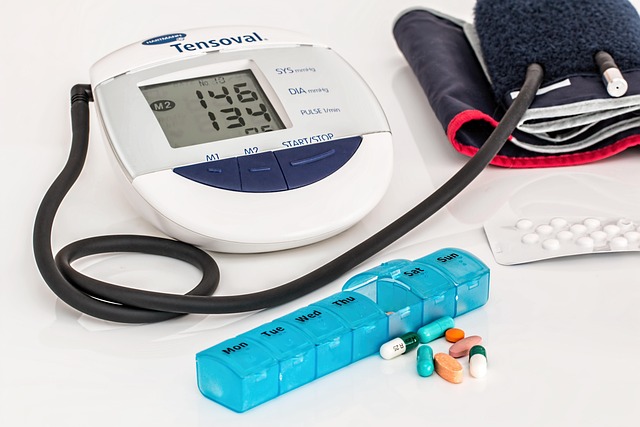
Options compared: 7-day log vs clinic-only
This section applies the guide's stated rule for 2026 hypertension titration: the default input is the days 2–7 average of a 7-day home log with 2 readings/day and at least 12 valid readings, and a single clinic reading is used only when the log is incomplete, invalid, or discordant beyond the stated exception. The comparison below is a restatement of that rule, not a claim that the grounding sources ranked these options — none of the named sources reports a home-versus-clinic effect size. To apply the rule, count the valid readings in the log before any dose conversation.
Here is the comparison in plain terms:
| Option | What it samples | Main failure | Verdict |
|---|---|---|---|
| 7-day home log (2/day, days 2–7) | 12 valid readings across repeated resting states | Incomplete log | WINNER default |
| Clinic-only single reading | 1 office snapshot | White-coat or masked pattern invisible | Use only if log invalid |
| Spot home checks (1–2 readings) | Convenience | No trend | Not titration-grade |
The check is simple before any dose conversation: count the valid readings in the log. If the count is 12 or more from days 2–7, the log is the default input. If the count is short, the log is incomplete and you do not promote it to default status. If the device or technique fails are visible in the log, the log is invalid and you fall back. If the clinic number sits far from the log average beyond the discordance limit set elsewhere, the clinic reading becomes the tie-breaker, not the starting point. This is a rule about input quality, not a claim about any drug’s effect size.
Why the clinic-only column loses is visible in the failure cell: one office snapshot cannot show a white-coat or masked pattern. The Recharge Health & Wellness Spa Studio hypertension overview notes that high blood pressure usually has no symptoms, which is why regular checks matter; it does not say one check is enough to titrate. The NHS high blood pressure page makes the same practical point about long-term risk and the role of lifestyle changes and medicines, without turning a single reading into a default. Those sources support the need for measurement, not a frequency claim, so the 12-reading rule comes from the protocol definition, not from them.
Spot home checks of one or two readings give a snapshot, not a trend, so under this guide's rule they are context rather than titration input. The named sources do not change that picture: the Springer nurse-led telehealth review and the BJSM exercise-training meta-analysis address intervention and exercise-mode comparisons, and the chlorthalidone versus hydrochlorothiazide material and the fourth-line agent review address drug comparisons. None of them supplies a titration input rule, so none should be cited either for or against any measurement schedule.
So the operating rule is narrow and repeatable: default to the days 2–7 average of a 7-day home log with at least 12 valid readings; use a clinic reading only when the log is incomplete, invalid, or discordant beyond the margin agreed with the clinician in advance; treat spot checks as context, not as titration input. This is the guide's stated rule, not a result established by the grounding sources, and the number that enforces it is 12.

Costs, worked example, and worksheet
The arithmetic is fixed before anyone touches a cuff: two readings per day for seven days gives 14 scheduled readings. Day 1 is discarded as acclimation, leaving 12 valid readings from days 2–7 if every session is complete. The titration input is the average of those 12 valid readings, not an average that quietly folds in day 1. If a patient prefers three readings per day, the schedule becomes 21 scheduled readings and 18 valid readings after day 1 is discarded. Keep the two schedules separate. Do not mix a 2/day average with a 3/day average in the same titration note, because the sampling pattern changes even when the cuff and the patient are the same.
Here is the worked example, offered as an illustrative method rather than as evidence of an outcome. Patient A completes the 7-day log with 14 scheduled readings. Day 1 is 150/94 and 148/92, so both values are discarded. Days 2–7 contain 12 valid readings, and their mean is 138/86. The clinic reading is 150/95. The checkpoints are simple: valid count equals 12; home average equals 138/86; clinic value equals 150/95; the discarded day 1 values are not part of the mean. If any of those four lines cannot be reproduced from the log, the worksheet is not ready to support a titration decision.
Cost here is mostly a matter of workflow rather than a new charge. The Recharge Health & Wellness hypertension overview notes that high blood pressure usually has no symptoms, which is why regular checks matter; the NHS high blood pressure page likewise frames monitoring alongside lifestyle changes and medicines. Neither source supplies a price for home logging, so do not invent one. The practical cost to audit is the number of failed or unusable sessions: a missing evening, a cuff placed over clothing, a repeated number that looks copied rather than measured, or a device that cannot print or export its stored values. Each failure reduces the valid count and should be visible on the worksheet before the average is trusted.
Use this copy-usable worksheet in the chart or portal note: “7-day home BP log received: yes/no. Schedule: 2/day morning and evening × 7 days = 14 scheduled; day 1 discarded; valid days 2–7 count = ___ of 12. Mean systolic/diastolic for days 2–7 = ___/___. Device ID and last calibration/check: ___. Technique failures noted: ___. Clinic BP on same date window: ___/___. Discordance beyond prespecified margin: yes/no. If valid count is below 12, or technique/device failure is unresolved, or clinic and home values are discordant beyond the prespecified margin, mark log invalid and revert to the clinic reading only as the fallback input.”
For the 3/day variant, duplicate the same checks with the correct denominator: “21 scheduled; day 1 discarded; valid days 2–7 count = ___ of 18; mean days 2–7 = ___/___.” Do not convert an 18-reading mean into a 12-reading mean by dropping extra sessions after the fact unless the dropped sessions were invalid for a stated reason and the recalculation is shown. The point of the worksheet is reproducibility: another clinician should be able to recount the valid readings, recompute the mean, and reach the same titration input without guessing which values were included.
Limits and decision rules
The days 2–7 average is the default, but it is not universal. This section is where the rule stops being automatic: it lists the edge cases that break a 7-day home log and the if/then decisions that follow when that happens. The point is not to defend the default at all costs. It is to keep a bad input from driving a titration decision, since high blood pressure usually has no symptoms and the only way to find it is through regular checks, as the Recharge Health & Wellness Spa Studio hypertension overview notes.
| Edge case | Rule breaks? | Still wins? |
|---|---|---|
| Irregular pulse or atrial fibrillation | An oscillometric home device may reject the session or give an unreliable result. | No. Use a clinic reading or ambulatory monitoring under the care plan. |
| Arm circumference outside the cuff range | The readings are invalid. | No. Fix the cuff fit first, then restart the log. |
| Night-shift worker | A fixed morning/evening schedule may not match wake and sleep. | Yes. Use a wake and before-bed schedule and document it. |
| Acute illness | The log is not titration-grade. | No. Discard it. |
| Pregnancy or renal disease | Routine default thresholds may not apply. | No. Use the specialist threshold in the care plan. |
Decision rule 1: if the pulse is irregular or the device flags the session, do not average around the problem. Move to a clinic reading or ambulatory monitoring as the care plan directs. Decision rule 2: if the cuff does not fit the arm, treat every reading from that cuff as invalid and correct the equipment before collecting another log.
Decision rule 3: if the person is a night-shift worker, keep the home-log default but change the timing labels. Take the two daily readings at wake and before bed, write that schedule down, and use those same anchors across the log so the comparison stays consistent.
Decision rule 4: if acute illness occurs during the collection period, discard the log rather than averaging through it. Decision rule 5: if pregnancy or renal disease is present, defer to the specialist threshold in the care plan instead of applying the routine default. These rules preserve the home log where it remains reproducible and remove it where the measurement itself is the problem.
Frequently Asked Questions
Which home readings are actually averaged for the 2026 titration input?
The default input is the days 2–7 average of a 7-day home BP log, with day 1 discarded as acclimation.
How many readings per day does the specified home protocol require?
The protocol calls for two readings per day, one in the morning and one in the evening.
What is the minimum number of valid readings needed for the home-log default to apply?
The default requires at least 12 valid readings.
How many scheduled readings remain after the acclimation day is removed if every session is complete?
A complete schedule creates 14 scheduled readings, with 12 remaining after day 1 is removed.
When does the guide switch from the home-log average to a clinic reading?
A clinic reading is used when the log is incomplete, invalid, or discordant beyond the stated rule.
Why is a repeated-reading average preferred over a single clinic measurement?
A clinic reading captures one moment in one setting, while a 7-day log samples the same person across repeated resting states, including different mornings and evenings, making the average less dependent on a single unusual session.
Quick answers
| For 2026 hypertension titration, what is the default input instead of a single clinic reading? | The default input is the days 2–7 average of a 7-day home BP log—2 readings/day, at least 12 valid readings. |
| When does the answer change to using a clinic reading? | The answer changes when the log is incomplete, invalid, or discordant beyond the stated rule. |
| What protocol does the 7-day home log mean for this section? | It means two readings per day, morning and evening, for seven days; discard day 1 as acclimation; average the valid readings from days 2 through 7. |
| How many scheduled readings are created if every session is complete, and how many remain after day 1 is removed? | That schedule creates 14 scheduled readings, with 12 remaining after day 1 is removed. |
| Why are repeated readings preferred over a clinic reading? | A clinic reading captures one moment in one setting, while a 7-day log samples the same person across repeated resting states, including different mornings and evenings, which makes the average less dependent on a single unusual session. |
Also worth reading: Comparative Analysis The SIDAS vs Beck Scale - Key Differences in Measuring Suicidal Ideation Severity: Comparative Analysis The SIDAS vs · McDonald's Keto 2026: Which Combo Orders Stay Under 20g: McDonald's Keto 2026: Which Combo · Mediterranean Diet Wins at 32 Weeks: 2026 Meta-Analysis: Mediterranean Diet Wins at 32